
People often ask "which one do you like best?" Well that changes about as often as we get a new radio and depends on how old the radio is, design, cabinet and function, not in any particular order. I like the Federal 110 because of it's age, design and function, meaning it is from 1923 was built well and works well especially for a 3 tube receiver. The cabinet is about average for the time.
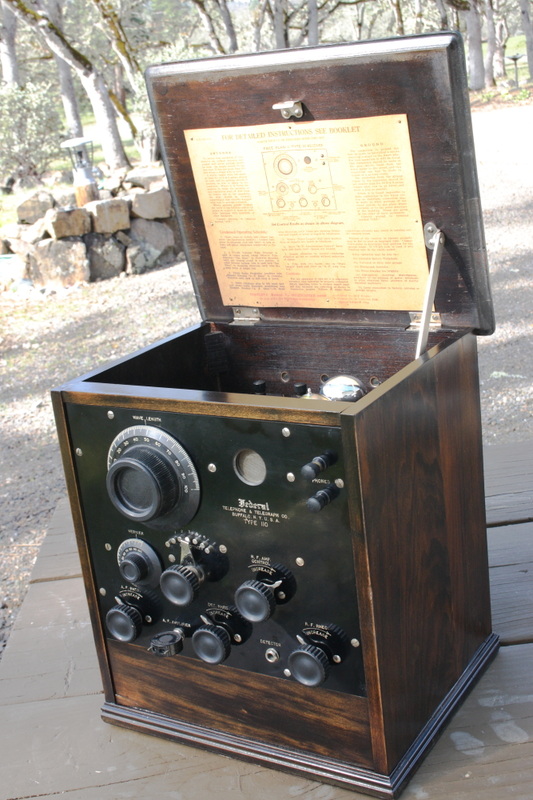 |
It uses the familiar 201A tubes like most radios of the period and a gaseous detector, the 200. In early 1923 these would have been brass based UV style tubes drawing 1/4 amp filament current except the 200 which was still a full 1 amp tube that glows like a light bulb. The UV tubes had short pins compared to the UX style that were soon to come. The Number varied by manufacture but could have been UV 201, 301 or 401. The UX tubes will work as well as will the later 01A except in the detector position where the 200 resides. Installing a 1/4 amp tube in this location will cause the detector filament control to not function properly and this is a critical adjustment for a gaseous detector. In fact the 2 Federals we have take full advantage of the rather picky detector tubes and that is another reason to like these radios. Not only do all of the knobs and switched work, they actually DO something.
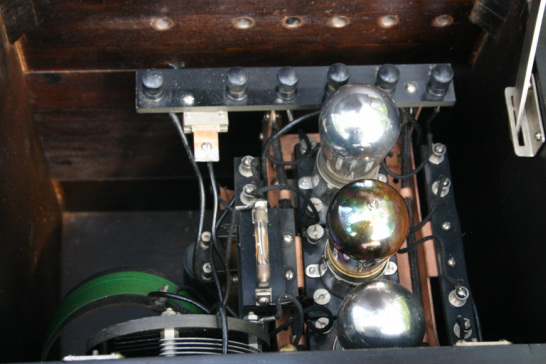
All three tubes sockets are mounted to a sub-chassis that is in turn held suspended by heavy black cord providing mechanical isolation with the major objective (I suspect) to avoid microphonics.
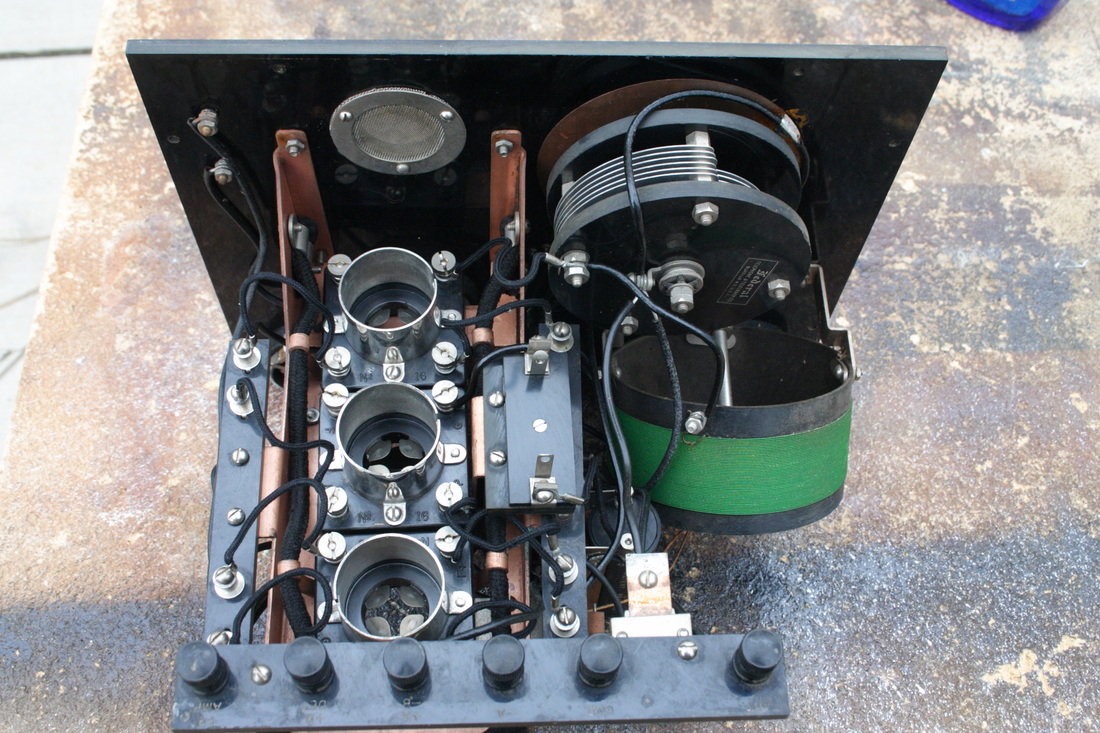
Like in the larger model 59 (earlier post) headphone jacks are provided so that you may listen to the output of each stage, thought there is not much to listen to at the output of the first RF amp, the final audio amp provides enough gain to drive a high impedance speaker/horn.
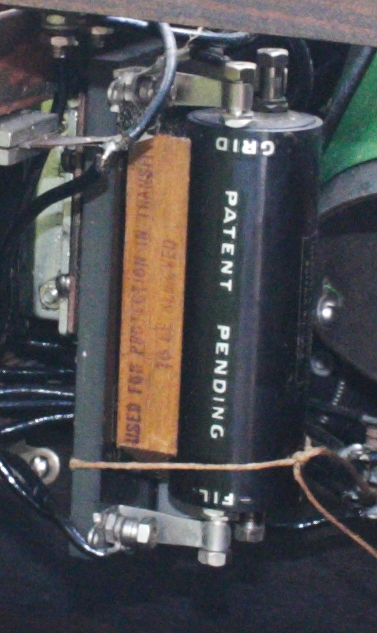
Here is an interesting note. The wooden block in the picture above clearly says to remove prior to operation. It was placed under the transformer to dampen vibration in shipping. So even in 1923 people could not be expected to read the directions, even though they are attached to the inner lid. And, since it survived this long, I left it in place since doing so would not impact the radio's performance except in the case of vibration (microphonics again).
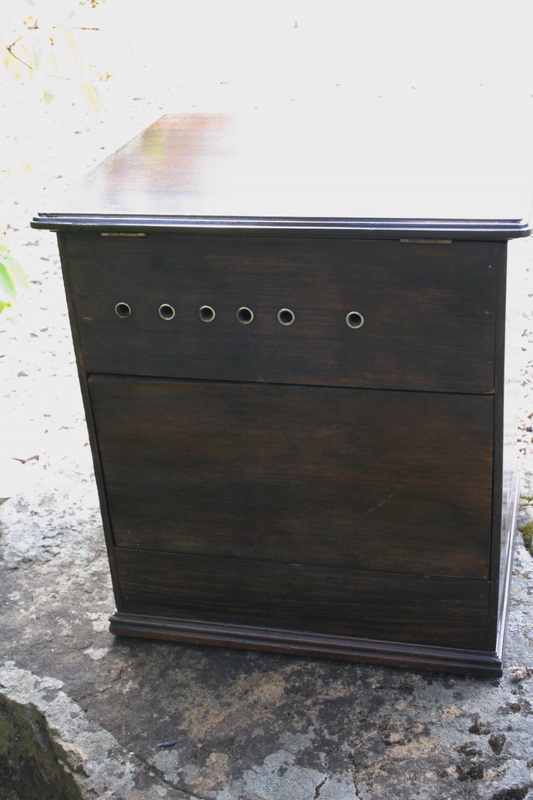
The cabinet has a removable back cover which is often missing.
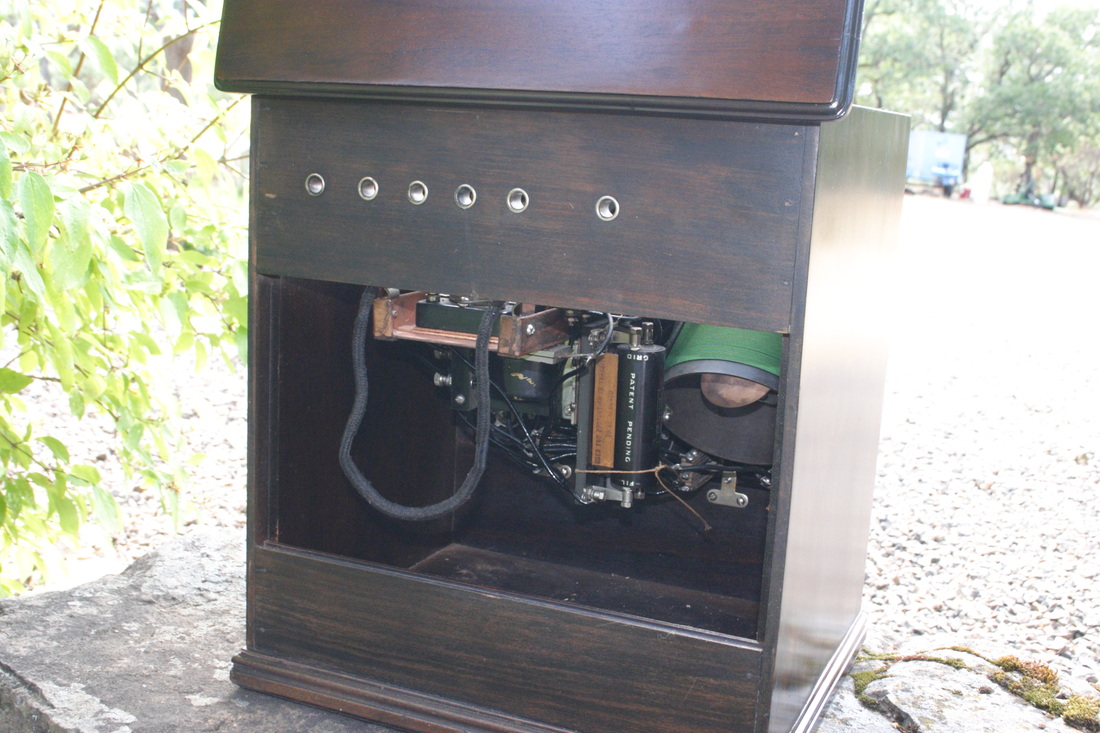
So, why has it taken several months to get this post up? The very nice hinged top lid was warped badly, so bad that it would not clip shut. It has a ball and spring latch. The radio has been working for a long time.
SO - - I removed the lid about a week ago and soaked it in water for a couple of days. The laminated pieces fell apart as well as the joined Poplar core (I think, it has a lot of green grain). The core, about 3/8 of an inch thick was 4 pieces. Each was clamped between 3/4 oak plywood and dried in our wood kiln (Sue's kitchen oven) at 250 deg for several hrs. and then remained clamped for several more days. The other laminations were also preserved for reuse.
Here is the problem. What looks like a rather thick veneer of Poplar (also) ran at 90 deg to the core but only on the lower side. No reciprocal piece was incorporated on the top side, only a mahogany veneer who's grain ran the same direction as the core. Even though the layers were clamped and dried this veneer was swelled on one dimension, shrunk in the other and began to crimp (shrink) only in the center immediately upon being freed from the clamps. In it's former application it was certainly exerting considerable force on the core and there was nothing on the other side to counteract.
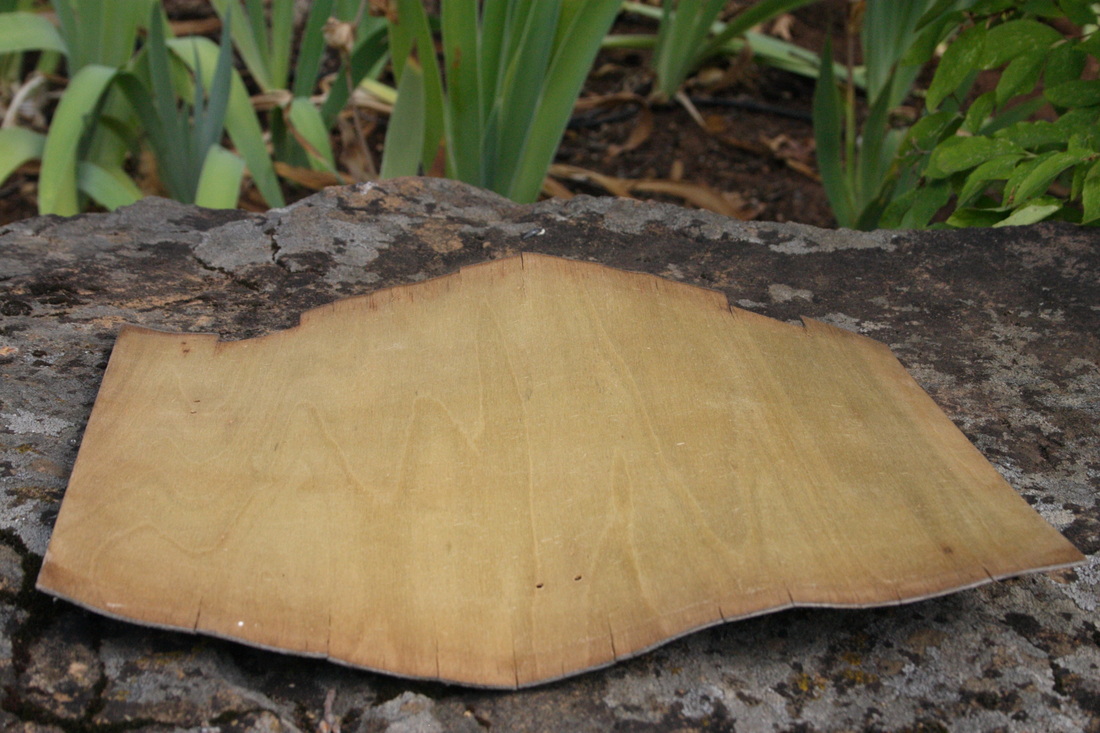
Now, this slice was not reinstalled into our new lid, but 2 layers of mahogany, one on top and one on the bottom were. The original finish veneer was used on the bottom, after the mahogany. The lid was then refinished
A lot of work to preserve as much of the original lid as possible. And with any luck it will remain flat.
What do you think?
Any other warped 110 lids out there?
A lot of work to preserve as much of the original lid as possible. And with any luck it will remain flat.
What do you think?
Any other warped 110 lids out there?


 RSS Feed